What Is a Flexi Cap Fund?
October 25th, 2026 News
Introduction
If you are building long-term wealth, you have probably come across the question: what is a flexi cap fund, and is it right for me? With hundreds of mutual fund schemes to choose from, picking the right category can feel overwhelming, especially for first-time investors.
Flexi cap funds have become one of the most talked-about equity categories in India because they offer something rare: freedom. The fund manager can invest across large, mid and small companies in whatever proportion looks most promising, without being tied to a fixed formula.
In this guide, we explain what a flexi cap fund is, how it works, its benefits and risks, how it is taxed, and how you can start investing the smart way.
What Is a Flexi Cap Fund?
A flexi cap fund is an open-ended equity mutual fund that invests across companies of all market capitalisations: large cap, mid cap and small cap. As per SEBI regulations, a flexi cap fund must invest at least 65% of its total assets in equity and equity-related instruments. Beyond that, the fund manager has complete flexibility to decide how much goes into each market-cap segment.
This category was introduced by SEBI in November 2020 to give fund managers more freedom to follow opportunities wherever they appear.
In simple words, when large-cap stocks look attractive, the manager can increase exposure to them. When mid or small caps offer better growth potential, the manager can shift accordingly. You get a professionally managed, dynamically allocated equity portfolio in a single fund.
How Does a Flexi Cap Fund Work?
When you invest in a flexi cap fund, your money is pooled with that of other investors and deployed by a professional fund manager. The manager studies the economy, sectors and individual companies, then builds a portfolio designed to balance growth and risk.
The key features include:
-
Dynamic allocation: The manager can change the mix of large, mid and small caps based on market conditions.
-
Minimum equity exposure: At least 65% of assets stay in equities.
-
No market-cap restriction: There is no fixed limit on any one segment.
-
Active management: Returns depend largely on the manager's stock-picking skill.
Role of the Fund Manager
Because the category has no strict allocation rules, the fund manager's judgement matters a great deal. A skilled manager can protect the portfolio by leaning towards stable large caps during volatile phases, and capture higher growth by adding mid and small caps when valuations are favourable. This is why checking a fund's track record and investment philosophy is important before investing.
Flexi Cap Fund vs Multi Cap Fund
Many investors confuse these two categories. The difference is simple.
-
Multi cap funds must invest a minimum of 25% each in large, mid and small-cap stocks. The allocation is rule-based.
-
Flexi cap funds have no such minimum per segment. The allocation is entirely at the manager's discretion.
This makes flexi cap funds more adaptable, while multi cap funds offer a more predictable spread across market segments.
Flexi Cap vs Large Cap and Mid Cap Funds
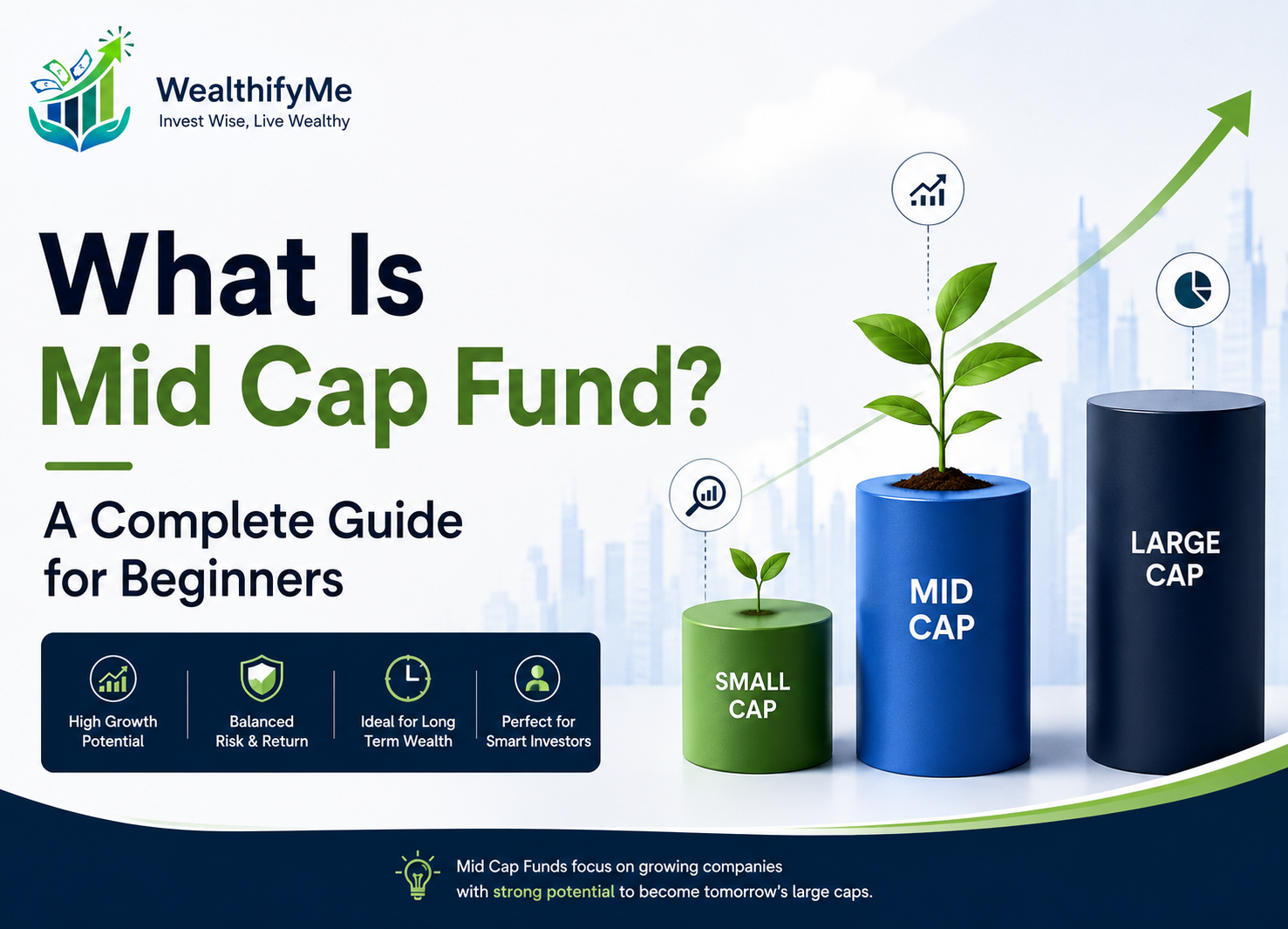
A large cap fund invests mainly in the top 100 companies and is generally steadier. A mid cap fund focuses on companies ranked 101 to 250 and carries higher growth potential with higher volatility. A flexi cap fund can combine both, which is why it is often viewed as a one-fund core equity solution.
Benefits of Investing in Flexi Cap Funds
Here is why many investors include flexi cap funds in their portfolios.
1. Diversification Across Market Caps
You gain exposure to large, mid and small companies in a single scheme, reducing the need to buy several separate funds.
2. Flexibility to Adapt to Market Cycles
The manager can respond to changing conditions instead of following a rigid mandate, which may help manage risk and capture opportunities.
3. Potential for Long-Term Wealth Creation
Equity has historically been one of the strongest asset classes for beating inflation over long periods. A flexi cap fund lets you participate in the growth of businesses across sizes.
4. Convenient for Beginners
New investors can start with one diversified equity fund rather than juggling multiple categories. You can invest through a Systematic Investment Plan (SIP) with a small monthly amount.
5. Professional Management
Research, stock selection and rebalancing are handled by experienced professionals, saving you time and effort.
Risks of Flexi Cap Funds
No investment is risk-free, and flexi cap funds are no exception.
Market Volatility
Since the fund is equity-oriented, its value can rise and fall with the stock market, especially in the short term. Funds in this category usually carry a high risk level on the SEBI riskometer.
Fund Manager Dependence
The fund's performance depends heavily on the manager's decisions. A wrong allocation call can affect returns.
Small and Mid-Cap Exposure
When the manager holds a larger share of smaller companies, the portfolio can be more volatile during market corrections.
Who Should Invest in a Flexi Cap Fund?
A flexi cap fund may suit you if:
-
You have a long investment horizon of five years or more.
-
You want diversified equity exposure through a single fund.
-
You can tolerate market ups and downs.
-
You are saving for goals such as retirement, children's education or wealth creation.
It may not be suitable if you need your money in the short term or cannot handle fluctuations in value.
How Are Flexi Cap Funds Taxed?
Flexi cap funds are treated as equity-oriented funds for tax purposes. Under current rules:
-
Short-term capital gains (units sold within 12 months): taxed at 20%.
-
Long-term capital gains (units held for more than 12 months): taxed at 12.5% on gains above ₹1.25 lakh in a financial year.
Tax rules can change, so always confirm the latest provisions on the Income Tax Department website or consult a tax professional before investing.
How to Invest in a Flexi Cap Fund
Starting is easier than most people think.
-
Complete your KYC using your PAN, Aadhaar and bank details.
-
Define your goal and time horizon so you can choose an appropriate scheme.
-
Compare funds on long-term performance, consistency, expense ratio, portfolio quality and fund house reputation. You can verify scheme details on the AMFI website.
-
Choose SIP or lump sum. SIPs help average your cost and build discipline.
-
Review regularly and rebalance if your goals or risk appetite change.
Why Choose WealthifyMe as the Best Mutual Fund Distributor in Faridabad
Choosing the right fund is only half the journey. The other half is having reliable guidance, and that is where WealthifyMe makes the difference. If you are searching for the best mutual fund distributor in Faridabad, WealthifyMe is built to help you invest with clarity and confidence.
Here is what you can expect:
-
Personalised guidance: Recommendations aligned with your goals, risk profile and time horizon.
-
Wide choice of schemes: Access to flexi cap funds and other categories from leading fund houses.
-
Simple, paperless investing: From KYC to SIP setup, the process is smooth and transparent.
-
Ongoing support: Regular portfolio reviews and answers to your questions along the way.
Whether you are a first-time investor or looking to restructure your portfolio, WealthifyMe's team helps you make informed decisions, not guesses.
Frequently Asked Questions (FAQs)
1. What is a flexi cap fund in simple words?
A flexi cap fund is an equity mutual fund that invests in large, mid and small-cap companies, with the fund manager free to choose the mix. At least 65% of the money must be in equities.
2. Is a flexi cap fund good for beginners?
Yes, many beginners find it suitable because it offers built-in diversification in one scheme. However, you should have a long-term horizon and be comfortable with market volatility.
3. What is the ideal investment period for a flexi cap fund?
A horizon of at least five to seven years is generally recommended to ride out market cycles and give the portfolio time to grow.
4. What is the difference between flexi cap and multi cap funds?
Multi cap funds must keep at least 25% each in large, mid and small caps. Flexi cap funds have no such fixed requirement, giving the manager more freedom.
5. Can I invest in a flexi cap fund through SIP?
Yes. You can start a SIP with a small monthly amount, which helps build discipline and average out your purchase cost over time.
Conclusion
So, what is a flexi cap fund? It is a flexible, professionally managed equity fund that invests across market capitalisations, giving you diversification and the potential for long-term growth in a single investment. While it carries market risk, it can be a strong core holding for investors with patience and a long-term outlook.
The right guidance can make your investing journey far smoother. If you are looking for the best mutual fund distributor in Faridabad, connect with WealthifyMe today and take the first step towards a goal-based investment plan built around you.
Disclaimer
Mutual fund investments are subject to market risks. Please read all scheme-related documents carefully before investing. Past performance is not indicative of future returns. The information in this blog is for educational purposes only and should not be treated as investment, tax or legal advice. Tax rules and regulations are subject to change. Please consult a qualified financial advisor before making any investment decision.