How Compounding Works in Mutual Funds
May 11th, 2026 News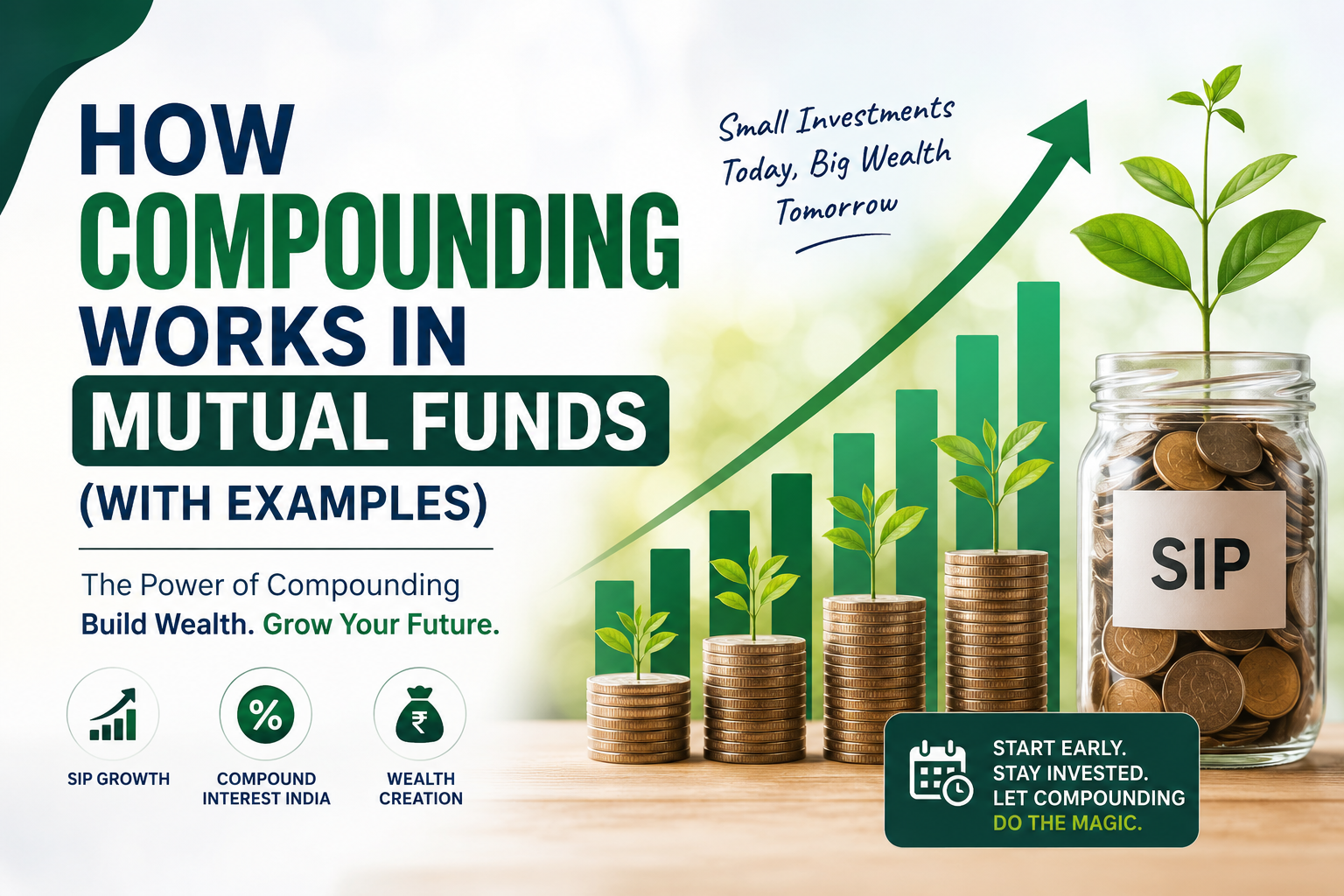
How Compounding Works in Mutual Funds (With Examples)
Introduction
Have you ever wondered why financial experts always say, “Start investing early”?
The answer is simple — the power of compounding.
Compounding is one of the biggest reasons why mutual funds and SIPs help people build long-term wealth. Even small investments can grow into large amounts when given enough time.
In this blog, we’ll understand how compounding works in mutual funds with simple real-life examples.
What is Compounding?
Compounding means earning returns not only on your original investment but also on the returns you already earned earlier.
In simple words:
Your money starts making money for you.
The longer you stay invested, the faster your wealth can grow.
Why Compounding Matters in Mutual Funds
Mutual funds generate returns through:
- Capital appreciation
- Dividends
- Market growth over time
When you stay invested for many years, these returns keep getting reinvested automatically, which creates a compounding effect.
This is why long-term investors usually create more wealth compared to short-term investors.
Understanding SIP Growth with Example
Let’s understand this with a simple SIP example.
Suppose:
- Monthly SIP = ₹5,000
- Investment Period = 20 Years
- Expected Return = 12% annually
After 20 years:
- Total Investment = ₹12,00,000
- Estimated Wealth Created = Around ₹50,00,000
That means:
You invested only ₹12 lakh, but compounding helped your money grow to nearly ₹50 lakh.
The Biggest Secret of Compounding: Time
Compounding works best when:
- You start early
- You invest regularly
- You stay invested for long periods
Even a delay of 5 years can make a huge difference.
Example Comparison
| Investor | Start Age | Monthly SIP | Investment Period | Approx Wealth |
|---|---|---|---|---|
| Rahul | 25 | ₹5,000 | 30 Years | ₹1.75 Crore |
| Aman | 35 | ₹5,000 | 20 Years | ₹50 Lakh |
Rahul invested only 10 extra years, but his wealth became much larger because compounding got more time to work.
Common Mistakes That Stop Compounding
1. Stopping SIPs Frequently
Many investors stop investing during market crashes. This breaks the compounding cycle.
2. Withdrawing Money Early
Early withdrawals reduce future growth potential.
3. Waiting for “Perfect Time”
The best time to start investing is as early as possible.
4. Investing for Short Term Only
Compounding needs patience. Mutual funds work better for long-term goals.
How to Maximize Compounding in Mutual Funds
Start Early
Even small amounts can become large over time.
Increase SIP Every Year
Try increasing your SIP by 10% annually.
Stay Consistent
Regular investing builds discipline and long-term wealth.
Avoid Panic Selling
Market volatility is normal. Long-term investors usually benefit more.
Conclusion
The power of compounding is one of the strongest wealth-building tools in investing.
You do not need a huge salary or massive capital to become wealthy.
You simply need:
- Discipline
- Time
- Consistency
The earlier you start your SIP journey, the more compounding can help your future.
Conclusion
Building wealth is not about finding a “quick rich” scheme — it’s about making smart financial decisions consistently over time. That’s exactly why the power of compounding is considered one of the most important concepts in investing.
A small SIP started today can become a significant financial asset in the future when combined with patience, discipline, and the right investment strategy.
However, many investors still struggle with questions like:
- Which mutual fund should I choose?
- How much SIP should I start?
- How do I plan for long-term goals?
This is where proper financial guidance and planning can make a real difference. Platforms like WealthifyMe help investors understand mutual funds, SIPs, and wealth creation strategies in a simple and practical way so they can make better financial decisions for their future.
Frequently Asked Questions (FAQs)
1. What is the power of compounding in mutual funds?
Compounding means earning returns on both your invested money and previous returns generated over time.
2. How does SIP help in compounding?
SIP allows regular investments, and each investment gets time to grow through market returns and reinvestment.
3. Is compounding guaranteed in mutual funds?
No. Mutual fund returns depend on market performance, but long-term investing historically improves growth potential.
4. How much time is needed for compounding to work?
Generally, compounding becomes more powerful after 10–15 years of consistent investing.
5. Which mutual funds are best for long-term compounding?
Equity mutual funds are generally preferred for long-term wealth creation because they have higher growth potential over time.
Final Takeaway
Small investments + Long Time + Discipline = Big Wealth
Start your SIP today and let compounding work for your future financial freedom.