Top Mutual Fund Mistakes Beginners Must Avoid
May 8th, 2026 News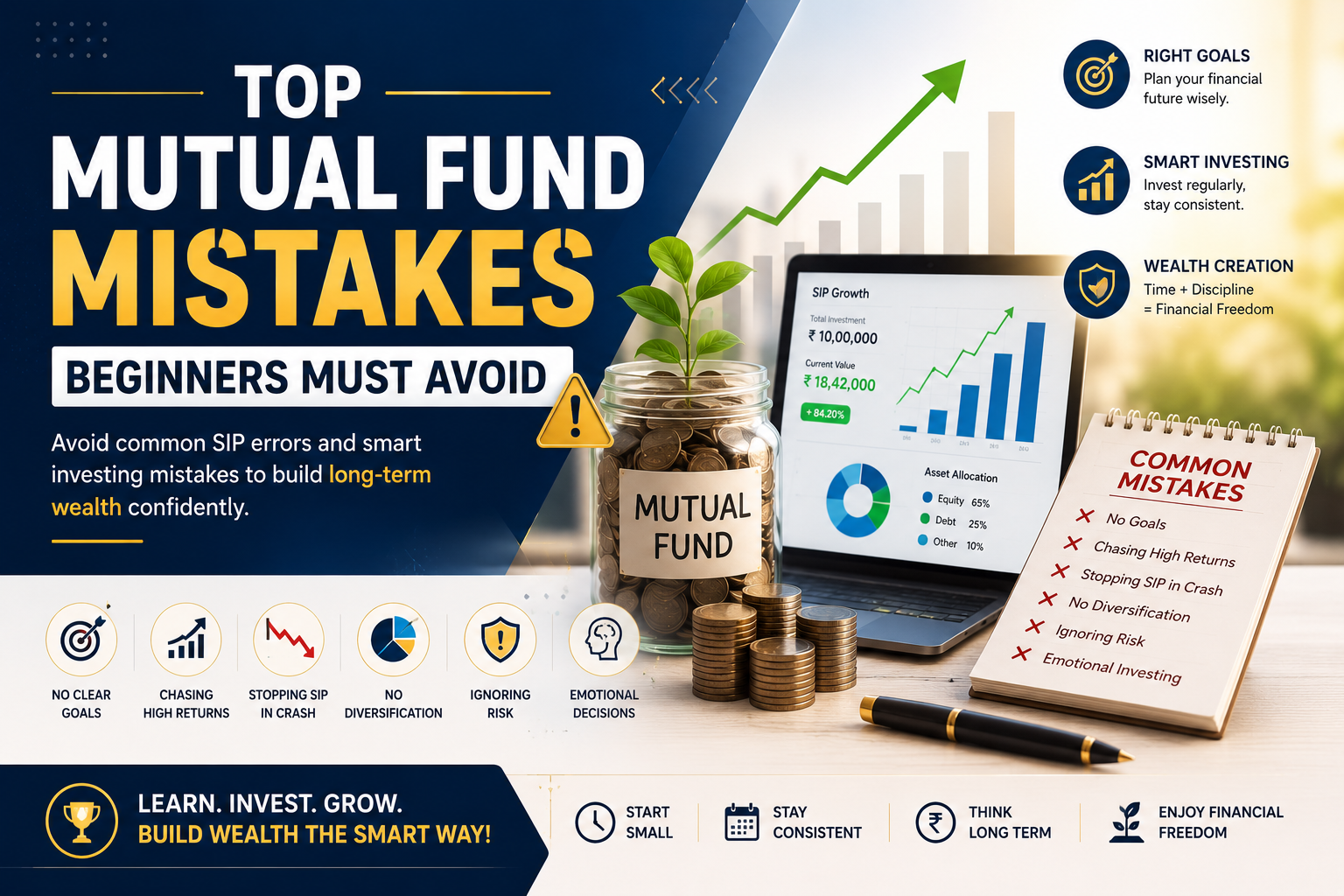
Introduction
Mutual funds have become one of the most popular investment options in India. With the rise of SIPs (Systematic Investment Plans), more beginners are starting their investment journey to build long-term wealth. However, many new investors make common mistakes that can reduce returns and affect their financial goals.
Understanding these mutual fund mistakes can help you invest smarter and avoid unnecessary losses. In this blog, we will discuss the biggest SIP errors and investing mistakes in India that every beginner should avoid.
1. Investing Without Financial Goals
One of the biggest mistakes beginners make is investing without a clear financial goal. Many people start SIPs just because their friends or social media influencers recommend them.
Before investing, ask yourself:
- Why am I investing?
- What is my target amount?
- How long can I stay invested?
Your goals may include:
- Buying a house
- Child education
- Retirement planning
- Emergency fund
- Wealth creation
Having clear goals helps you choose the right mutual fund.
2. Choosing Funds Only Based on High Returns
Many investors choose mutual funds by looking only at past returns. This is one of the most common SIP errors.
A fund that performed well in the past may not give the same returns in the future.
Instead of chasing high returns, focus on:
- Fund consistency
- Risk level
- Expense ratio
- Fund manager experience
- Investment strategy
Always choose funds according to your financial goals and risk appetite.
3. Stopping SIPs During Market Crash
When markets fall, beginners often panic and stop their SIP investments. This is one of the biggest investing mistakes in India.
Market corrections are normal and temporary. In fact, SIPs work best during market downturns because investors get more units at lower prices.
Long-term investors should stay disciplined and continue investing even during volatile market conditions.
4. Ignoring Risk Factors
Every mutual fund has a different risk level.
| Fund Type | Risk Level |
|---|---|
| Liquid Funds | Low |
| Debt Funds | Moderate |
| Hybrid Funds | Medium |
| Equity Funds | High |
Many beginners invest in risky small-cap funds without understanding volatility.
Before investing, understand:
- Your income stability
- Financial responsibilities
- Investment horizon
- Risk tolerance
Choosing the wrong fund can create unnecessary stress during market fluctuations.
5. Not Diversifying Investments
Putting all money into a single mutual fund is risky.
Diversification helps reduce overall portfolio risk.
A balanced portfolio can include:
- Large-cap funds
- Mid-cap funds
- Index funds
- Debt funds
Diversifying investments helps protect your portfolio during uncertain market conditions.
6. Ignoring Expense Ratio
Expense ratio is the fee charged by mutual fund companies for managing your investment.
Even a small difference in expense ratio can impact long-term returns significantly.
For example, a fund with a 2% expense ratio may reduce your overall profits compared to a fund charging only 0.5%.
Always compare expense ratios before investing.
7. Investing Based on Social Media Hype
Nowadays many beginners invest after watching viral finance reels or influencer recommendations.
This is becoming one of the biggest mutual fund mistakes among young investors.
Remember:
- Every investor has different goals
- Risk appetite differs from person to person
- What works for others may not work for you
Always do your own research before investing.
8. Not Reviewing Portfolio Regularly
Investing is not a one-time process.
Many people start SIPs and forget about them completely.
You should review your portfolio every 6–12 months to check:
- Fund performance
- Goal progress
- Asset allocation
- Risk balance
Regular portfolio reviews help maintain better financial planning.
9. Expecting Quick Returns
Mutual funds are designed for long-term wealth creation.
Many beginners expect huge profits within a few months and become disappointed.
The real power of mutual funds comes from:
- Compounding
- Long-term investing
- Consistent SIPs
Patience is one of the most important factors in successful investing.
10. Not Building an Emergency Fund
Before investing aggressively in mutual funds, beginners should first create an emergency fund.
Without emergency savings, investors may withdraw their mutual fund investments during financial emergencies.
Ideally, keep at least 6 months of expenses in:
- Savings account
- Liquid funds
- Emergency cash reserve
This helps protect your long-term investments.
Tips to Avoid Mutual Fund Mistakes
Here are some smart tips for beginners:
- Start with small SIP amounts
- Invest consistently
- Focus on long-term goals
- Avoid emotional investing
- Diversify your portfolio
- Review investments regularly
- Learn basic financial concepts
Consistency matters more than trying to time the market.
Frequently Asked Questions (FAQs)
1. What are the most common mutual fund mistakes beginners make?
Some common mutual fund mistakes include investing without goals, stopping SIPs during market crashes, chasing high returns, ignoring risk factors, and not diversifying investments.
2. Is SIP safe for beginners in India?
Yes, SIPs are considered one of the safest and most disciplined ways for beginners to start investing in mutual funds because they allow regular investing with lower risk through rupee cost averaging.
3. Should I stop my SIP when the market falls?
No, stopping SIPs during market corrections is a common mistake. Market downturns help investors buy more units at lower prices, which benefits long-term wealth creation.
4. How much should a beginner invest in mutual funds?
Beginners can start with a small SIP amount like ₹500 or ₹1000 per month and gradually increase investments according to income and financial goals.
5. How long should I stay invested in mutual funds?
For better returns and the benefit of compounding, investors should ideally stay invested for at least 5–10 years, especially in equity mutual funds.
Conclusion
Mutual funds can be one of the most powerful tools for long-term wealth creation when used with patience, discipline, and the right strategy. Most beginners fail not because mutual funds are risky, but because they make emotional and uninformed investment decisions.
By avoiding these common mutual fund mistakes, understanding SIP basics, and staying focused on long-term goals, you can create a stronger financial future with confidence.
Smart investing is not about timing the market perfectly — it is about staying consistent and making informed decisions over time. Platforms like WealthifyMe are helping beginners learn more about investing, financial planning, and wealth creation in a simple and practical way.
Remember, your financial journey becomes successful when knowledge and consistency go together