Old vs New Tax Regime in 2026: Which Option Is Better for Indian Business Owners This Year?
February 21st, 2026 News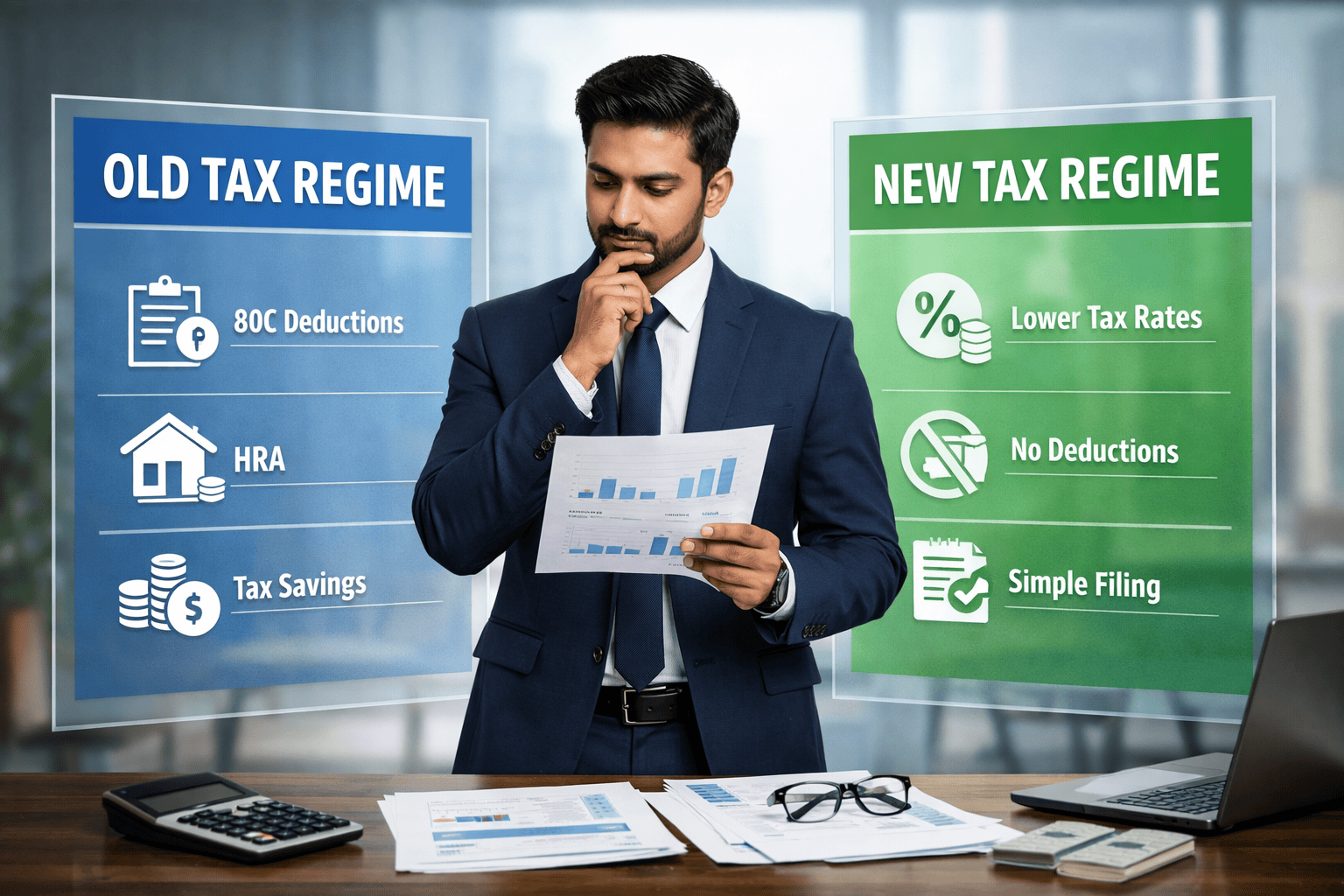
Old vs New Tax Regime in 2026: Which Option Is Better for Indian Business Owners This Year?
Introduction
Choosing between the Old Tax Regime and New Tax Regime in 2026 is one of the most important financial decisions for business owners.
The right choice can save you lakhs in taxes.
The wrong one can increase your tax burden unnecessarily.
With updated slab structures and evolving compliance requirements, understanding which regime works best for entrepreneurs is crucial.
In this guide, we’ll break down:
-
Tax slab comparison
-
Key differences
-
Deductions available
-
When to choose each regime
-
Practical examples for business owners
Let’s simplify it.
Understanding the Old Tax Regime
The Old Tax Regime offers multiple deductions and exemptions but has relatively higher tax slab rates.
Key Features:
-
Allows deductions under Section 80C, 80D, etc.
-
Home loan interest deduction
-
HRA benefits
-
Business expense deductions
-
NPS benefits
-
Standard deduction
Who Benefits Most?
Business owners who:
-
Invest heavily in tax-saving instruments
-
Have home loans
-
Pay health insurance premiums
-
Contribute to retirement schemes
-
Claim substantial business expenses
The old regime rewards disciplined financial planning.
Understanding the New Tax Regime (2026)
The New Tax Regime offers lower slab rates but removes most exemptions and deductions.
Key Features:
-
Lower tax rates
-
Minimal deductions allowed
-
Simpler compliance
-
No need to invest solely for tax saving
Who Benefits Most?
Business owners who:
-
Do not claim many deductions
-
Prefer simplified tax calculation
-
Have lower investment-based deductions
-
Want minimal documentation
The new regime focuses on simplicity.
Tax Slab Comparison (2026 Overview)
While exact slab rates may change slightly based on government updates, the general structure remains:
Old Tax Regime:
-
Higher slab rates
-
Multiple deductions allowed
New Tax Regime:
-
Lower slab rates
-
Very limited deductions
Lower rates do not always mean lower tax liability.
The real difference depends on your deductions.
Major Deductions Allowed in Old Regime
Here are the most important deductions business owners commonly use:
Section 80C (Up to ₹1.5 Lakh)
-
ELSS
-
PPF
-
Principal home loan repayment
Section 80D
-
Health insurance premiums
Section 80CCD(1B)
-
Additional ₹50,000 NPS contribution
Home Loan Interest (Section 24)
-
Up to ₹2 lakh
Business Expenses
-
Office rent
-
Staff salary
-
Travel
-
Depreciation
-
Utilities
These significantly reduce taxable income.
What You Lose in the New Regime
Under the new tax regime, most of these deductions are not allowed.
That means:
-
No 80C benefit
-
No 80D
-
No home loan deduction
-
Limited exemptions
If you rely heavily on deductions, switching to the new regime may increase your tax outgo.
Example: Business Owner Earning ₹50 Lakhs
Let’s consider a practical scenario:
Case 1 – Using Old Regime:
-
₹1.5L under 80C
-
₹50K under NPS
-
₹2L home loan interest
-
₹75K health insurance
-
Business expense deductions
Total deduction impact significantly reduces taxable income.
Case 2 – Using New Regime:
-
No major deductions allowed
-
Lower slab rate applied
Depending on total deductions, the old regime may result in lower tax.
This is why calculation is essential.
When Should Business Owners Choose the Old Regime?
Choose the Old Regime if:
-
You invest consistently in tax-saving instruments
-
You have housing loan interest
-
You contribute to NPS
-
You have strong financial discipline
-
Your deductions exceed ₹3–4 lakhs
The old regime rewards structured planning.
When Should Business Owners Choose the New Regime?
Choose the New Regime if:
-
You do not claim many deductions
-
You prefer simplified filing
-
Your business is in early growth stage
-
You want better cash flow without forced investments
The new regime works well for low-deduction profiles.
Important Rule for Business Owners
Unlike salaried individuals, business owners must be careful while switching regimes.
Frequent switching may not always be permitted depending on business income classification.
Before choosing a regime, consult a professional and evaluate:
-
Projected income
-
Business structure
-
Long-term wealth strategy
Which Regime Builds More Wealth?
This is the most important question.
Tax planning is not just about saving tax today.
It’s about long-term wealth creation.
The old regime encourages:
-
Investment discipline
-
Asset creation
The new regime encourages:
-
Simplicity
-
Immediate liquidity
The better option depends on your financial behavior.
Common Mistakes Business Owners Make
-
Choosing regime without calculation
-
Copying salaried friends’ decision
-
Ignoring home loan benefits
-
Forgetting business deductions
-
Not reviewing choice annually
Every business owner’s case is unique.
How to Decide the Best Tax Regime in 2026
Follow this simple 5-step method:
-
Calculate total expected income
-
List all deductions
-
Estimate total tax under old regime
-
Estimate tax under new regime
-
Compare net tax liability
The lower tax option is your answer.
But remember — also consider long-term financial goals.
Pro Tip for Entrepreneurs
If your annual deductions exceed ₹3–5 lakhs, the old regime often becomes more beneficial.
If deductions are minimal, the new regime may work better.
However, a professional calculation ensures accuracy.
Final Verdict: Old vs New Tax Regime 2026
There is no universal “better” option.
For disciplined investors and structured business owners → Old Regime often wins.
For simple income structures with fewer deductions → New Regime may be beneficial.
The smartest approach?
Run both calculations before deciding.
Frequently Asked Questions
Can business owners switch between regimes every year?
Switching rules differ for business income. Professional advice is recommended.
Is the new tax regime compulsory in 2026?
No, both options are available.
Which regime is simpler?
The new regime is simpler due to fewer deductions.
Which regime saves more tax?
Depends on your deduction profile and income level.
Conclusion
Choosing between the Old and New Tax Regime in 2026 is not just a compliance decision — it’s a strategic financial decision.
The right choice can improve cash flow, increase investments, and accelerate wealth creation.
Before finalizing your regime:
-
Compare both options
-
Evaluate deductions
-
Align with long-term goals