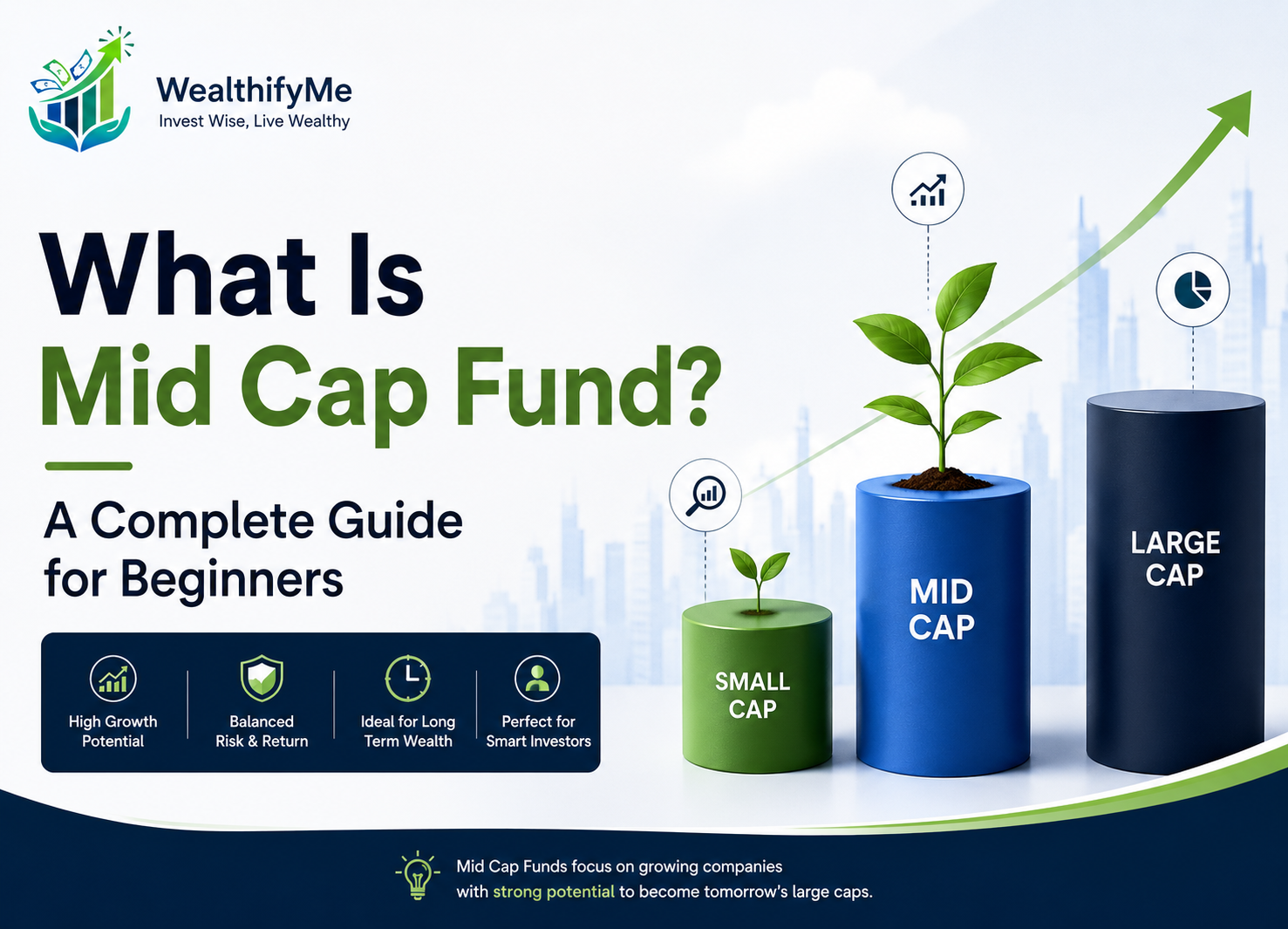
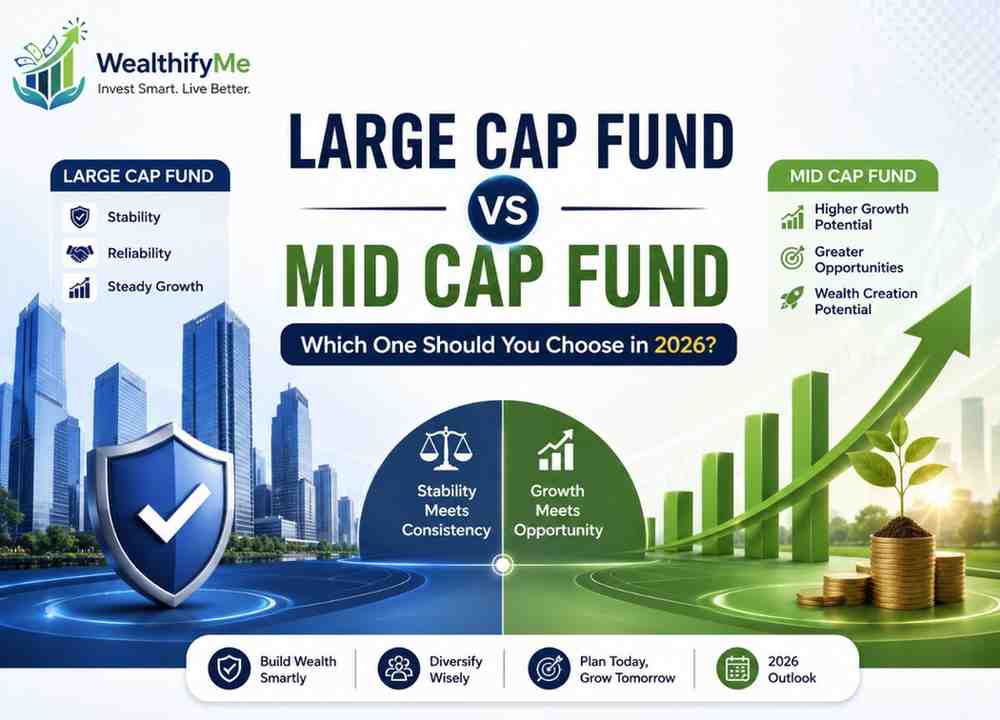
What Is Large Cap Mutual Funds?
August 7th, 2026 News
What Is Large Cap Mutual Fund? A Complete Guide for Investors
If you're new to investing or looking to build a stable foundation for your portfolio, you've probably come across the term "large cap mutual funds." These funds are among the most popular choices for both beginner and experienced investors because they offer a balanced mix of growth and stability. In this guide, we'll break down what large cap mutual funds are, how they work, their benefits and risks, and how to choose the right one for your financial goals.
What Is Large Cap Mutual Funds?
Large cap mutual funds are equity mutual funds that primarily invest in the stocks of large-cap companies — businesses with a substantial market capitalization, typically ranking among the top 100 companies listed on the stock exchange by market value. These are well-established, financially strong companies with a proven track record of stable earnings and consistent performance.
In simple terms, when you invest in a large cap mutual fund, your money is pooled with other investors' money and used to buy shares of large, reputable companies. Fund managers actively select stocks that fit the fund's mandate, aiming to deliver steady, long-term returns while managing risk.
Examples of large-cap companies typically include market leaders in banking, IT, FMCG, energy, and pharmaceuticals — household names that have demonstrated resilience through multiple market cycles.
How Do Large Cap Mutual Funds Work?
Large cap mutual funds work on a simple principle: pooling investor capital and deploying it into a diversified basket of large-cap stocks. Here's a quick breakdown of the process:
Fund Structure and Investment Mandate
As per regulatory guidelines, large cap mutual funds must invest a minimum percentage of their total assets (usually around 80%) in large-cap stocks. This ensures the fund stays true to its investment objective and doesn't drift into riskier mid-cap or small-cap territory.
Professional Fund Management
A dedicated fund manager and research team analyze market trends, company fundamentals, and economic indicators to select the best-performing large-cap stocks, aiming to outperform the fund's benchmark index over time.
NAV and Returns
Your investment is represented by units, and the value of these units is calculated daily as the Net Asset Value (NAV). As the underlying stocks appreciate or depreciate, the NAV moves accordingly, reflecting your investment's current value.
Key Features of Large Cap Mutual Funds
Understanding the core features of large cap mutual funds can help you evaluate whether they align with your investment strategy.
Stability and Lower Volatility
Since large-cap companies are well-established with strong balance sheets, large cap mutual funds tend to be less volatile compared to mid-cap or small-cap funds. This makes them a relatively safer option within the equity investment category.
Liquidity
Large-cap stocks are highly traded on stock exchanges, which means these funds generally offer good liquidity. Investors can redeem their units without significant impact on the fund's overall performance.
Diversification
Large cap mutual funds typically hold a diversified portfolio spanning multiple sectors like banking, technology, healthcare, and consumer goods. This diversification helps spread risk across industries rather than concentrating it in a single sector.
Long-Term Growth Potential
While large-cap stocks may not deliver the explosive growth seen in smaller companies, they offer steady and reliable growth over the long term, making them suitable for wealth creation with lower risk
Benefits of Investing in Large Cap Mutual Funds
1. Ideal for Conservative Equity Investors
If you want equity exposure but aren't comfortable with the higher volatility of mid-cap or small-cap funds, large cap mutual funds offer a middle ground — equity growth potential with comparatively lower risk.
2. Resilience During Market Downturns
Large-cap companies generally have stronger financials, better cash flow management, and greater market presence, allowing them to weather economic slowdowns better than smaller companies.
3. Suitable for Long-Term Financial Goals
Whether you're saving for retirement, your child's education, or building long-term wealth, large cap mutual funds can serve as a core holding in your portfolio due to their consistent performance history.
4. Professional Management
You don't need to track individual stocks or make buy/sell decisions yourself. Experienced fund managers handle stock selection and rebalancing on your behalf.
5. Easy Entry Through SIPs
Most large cap mutual funds allow investment through Systematic Investment Plans (SIPs), enabling you to invest small amounts regularly instead of a lump sum, helping average out market volatility.
Risks Associated With Large Cap Mutual Funds
While large cap mutual funds are relatively safer than mid-cap or small-cap funds, they aren't risk-free:
-
Market Risk: Since these funds invest in equities, they're subject to overall stock market fluctuations.
-
Lower Growth Potential: Compared to mid-cap and small-cap funds, returns may be more modest during strong bull markets.
-
Fund Manager Risk: Performance can vary based on the fund manager's stock-picking decisions and strategy.
-
No Guaranteed Returns: Like all mutual funds, returns are market-linked and not guaranteed.
Who Should Invest in Large Cap Mutual Funds?
Large cap mutual funds are well-suited for:
-
First-time equity investors who want to start with stable, well-known companies.
-
Conservative to moderate risk-takers seeking equity exposure without excessive volatility.
-
Long-term investors with a horizon of 5-7 years or more, aiming for steady wealth accumulation.
-
Investors nearing financial goals who want to reduce risk while staying invested in equities.
If you have a higher risk appetite, you might consider complementing large cap funds with mid-cap or small-cap allocations for a diversified portfolio.
How to Choose the Right Large Cap Mutual Fund
When selecting a large cap mutual fund, consider the following factors:
-
Historical Performance: Review returns over 3, 5, and 10-year periods against the benchmark and peer funds. Consistency matters more than short-term spikes.
-
Expense Ratio: A lower expense ratio means more of your returns stay in your pocket.
-
Fund Manager's Track Record: An experienced manager who has navigated different market cycles is a valuable indicator of future performance.
-
Portfolio Composition: Check the fund's top holdings and sector allocation to ensure it aligns with your risk tolerance.
-
Your Financial Goals: Ultimately, the right fund depends on your personal goals, investment horizon, and comfort with market fluctuations.
FAQs
1. What is the minimum investment required for large cap mutual funds?
Most large cap mutual funds allow you to start investing with as little as ₹500-₹1,000 per month through a SIP, or a lump sum of ₹1,000-₹5,000, depending on the fund house. This makes them accessible to investors at every stage of their financial journey.
2. Are large cap mutual funds safe for beginners?
Yes, large cap mutual funds are generally considered one of the safer options within equity mutual funds because they invest in financially strong, well-established companies. However, they still carry market risk, so beginners should invest with a long-term horizon and realistic return expectations.
3. What is the ideal investment horizon for large cap mutual funds?
A minimum investment horizon of 5-7 years is recommended to ride out short-term market fluctuations and benefit from the compounding growth that large-cap stocks typically offer over time.
4. Can I invest in large cap mutual funds through SIP?
Yes, SIP is one of the most popular and recommended ways to invest in large cap mutual funds. It allows you to invest a fixed amount regularly, average out your purchase cost, and build wealth in a disciplined manner without timing the market.
Conclusion
Large cap mutual funds offer a compelling combination of stability, professional management, and long-term growth potential, making them an excellent starting point for investors building an equity portfolio. While they may not deliver the highest returns compared to mid-cap or small-cap funds, their resilience during market volatility makes them a reliable choice for long-term wealth creation.
Choosing the right fund, however, is only half the equation — having the right guidance makes all the difference to how well your investments perform over time. This is where Wealthifyme comes in. As the best mutual fund distributor in Faridabad, Wealthifyme helps investors select the right large cap mutual funds based on their unique goals, risk appetite, and investment horizon, backed by personalized advice and ongoing portfolio support.
If you're looking to start or grow your mutual fund investments in Faridabad, get in touch with Wealthifyme today and take the first step toward smarter, well-guided investing.
Disclaimer: Mutual fund investments are subject to market risks. Please read all scheme-related documents carefully before investing.