FD vs Mutual Fund : Which Investment Option is Better in 2026?
June 13th, 2026 News
FD vs Mutual Fund : Which Investment Option is Better in 2026?
When it comes to investing money, most Indians face one common question: FD vs Mutual Fund India – which is the better investment option in 2026?
For years, Fixed Deposits (FDs) have been the preferred choice for conservative investors seeking safety and guaranteed returns. However, with rising inflation and changing financial goals, mutual funds have emerged as a popular wealth-building alternative.
If you're confused between a fixed deposit vs mutual fund, this guide will help you understand the differences in return
FD vs Mutual Fund India
If your priority is capital safety and guaranteed returns, Fixed Deposits may be suitable.
If your goal is long-term wealth creation, beating inflation, and potentially earning higher returns, mutual funds can be a better choice.
For most investors in India, a combination of both can create a balanced investment portfolio.
What is a Fixed Deposit (FD)?
A Fixed Deposit is a savings instrument offered by banks and NBFCs where you invest a lump sum amount for a fixed tenure and earn a predetermined interest rate.
Benefits of Fixed Deposits
- Guaranteed returns
- Low investment risk
- Fixed maturity period
- Easy to understand
- Suitable for conservative investor
FDs remain one of the most trusted investment options in India, especially among retirees and risk-averse investors.
What is a Mutual Fund?
A Mutual Fund pools money from multiple investors and invests it across stocks, bonds, government securities, and other financial instruments.
Professional fund managers manage these investments with the objective of generating returns for investors.
Benefits of Mutual Funds
- Professional management
- Diversification
- Higher return potential
- SIP and lump sum options
- Long-term wealth creation
For investors seeking financial growth, mutual funds are often considered a strong alternative to fixed deposits.
Fixed Deposit vs Mutual Fund: Detailed Comparison
| Feature | Fixed Deposit | Mutual Fund |
|---|---|---|
| Returns | Fixed | Market-Linked |
| Risk | Very Low | Low to High |
| Liquidity | Moderate | High |
| Inflation Protection | Limited | Better Potential |
| Tax Efficiency | Lower | Higher |
| Wealth Creation | Limited | High Potential |
| Investment Method | Lump Sum |
SIP & Lump Sum |
FD vs Mutual Fund India: Returns Comparison
Returns are often the biggest deciding factor when comparing FD vs Mutual Fund India.
FD Interest Rate 2026
Most banks in India are offering FD interest rates between approximately 6% and 8% depending on tenure and institution.
Example:
- Investment Amount: ₹5,00,000
- FD Interest Rate: 7%
- Investment Period: 5 Years
The maturity value will grow steadily but may not significantly outperform inflation.
Mutual Fund Returns
Mutual fund returns vary depending on market performance and fund category.
Historically:
- Debt Funds: 6%–9%
- Hybrid Funds: 8%–12%
- Equity Funds: 10%–15%+ over the long term
While returns are not guaranteed, quality mutual funds have historically outperformed fixed deposits over longer investment horizons.
Winner: Mutual Funds
If your objective is wealth creation and long-term growth, mutual funds generally offer better return potential than FDs.
Risk: Mutual Fund vs FD
Fixed Deposits
Fixed deposits offer stability and predictable returns.
Advantages include:
- Capital protection
- No market volatility
- Guaranteed interest earnings
Mutual Funds
Mutual funds are market-linked investments.
Risk levels vary:
- Debt Funds → Lower Risk
- Hybrid Funds → Moderate Risk
- Equity Funds → Higher Risk
However, investing for longer periods often helps reduce short-term market volatility.
Winner: Fixed Deposits
When comparing risk alone, FDs are generally safer than mutual funds.
Taxation: FD vs Mutual Fund India
Many investors overlook taxation while comparing investment options.
Tax on Fixed Deposits
FD interest is fully taxable according to your income tax slab.
For investors in higher tax brackets, post-tax returns can be significantly lower.
Tax on Mutual Funds
Mutual funds may offer better tax efficiency depending on fund type and holding period.
Additional benefits include:
- Long-term investment advantages
- Tax-saving ELSS mutual funds
- Potentially better post-tax returns
Winner: Mutual Funds
From a tax-efficiency perspective, mutual funds often have an advantage over fixed deposits.
Inflation Impact: Why It Matters
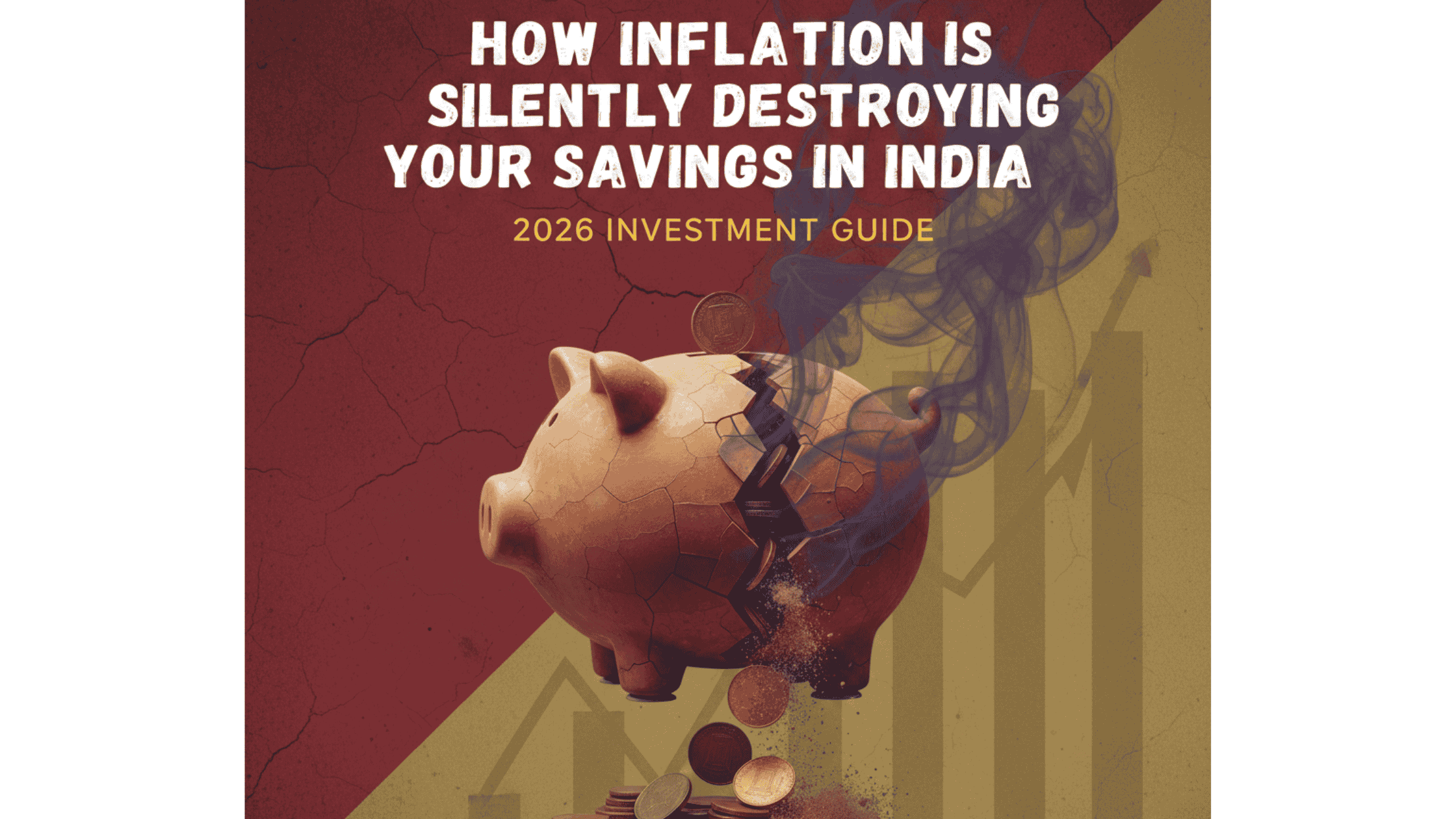
Inflation silently reduces the purchasing power of money.
Suppose inflation remains around 6%.
If your FD earns 7%, your real return is only around 1%.
This is one of the key reasons why many investors now consider mutual funds a better option than FD for long-term financial goals.
Equity mutual funds have historically generated returns that outpace inflation over long periods.
Winner: Mutual Funds
For investors seeking real wealth creation, mutual funds generally perform better against inflation.
Who Should Invest in Fixed Deposits?
FDs may be suitable if:
- You want guaranteed returns
- You need capital protection
- You have a short-term investment horizon
- You are retired or nearing retirement
- You have a low risk appetite
Who Should Invest in Mutual Funds?
Mutual funds may be suitable if:
- You want long-term wealth creation
- You are comfortable with market fluctuations
- You want to beat inflation
- You are planning for retirement
- You are investing for children's education
- You prefer SIP investing
Is Mutual Fund Better Than FD?
The answer depends on your goals.
If safety is your priority, FD can be a suitable option.
If growth is your priority, mutual funds generally provide better long-term wealth-building opportunities.
This is why many financial advisors recommend using both investment options strategically.
Best Strategy in 2026: Use Both
Instead of choosing one over the other, many successful investors combine both.
Example:
Fixed Deposits For:
- Emergency funds
- Short-term goals
- Capital protection
Mutual Funds For:
- Retirement planning
- Child education planning
- Wealth creation
- Long-term financial goals
This balanced approach helps reduce risk while maximizing growth opportunities.
Why Investors Are Moving from FD to Mutual Funds
In recent years, investors across India have increasingly shifted from traditional fixed deposits to mutual funds because:
- Inflation reduces FD returns
- SIP investing makes mutual funds accessible
- Better long-term return potential
- Professional fund management
- Goal-based investing opportunities
As financial awareness grows, more investors are exploring mutual funds as a core wealth-building tool.
How Wealthifyme Can Help
Choosing between FD vs Mutual Fund India depends on your financial goals, income, investment horizon, and risk tolerance.
At WealthifyMe, we help investors:
- Select suitable mutual funds
- Build goal-based investment plans
- Start SIPs confidently
- Create long-term wealth strategies
- Improve portfolio diversification
Whether you're a beginner or an experienced investor, personalized financial guidance can help you make better investment decisions.
FAQ
1. FD vs Mutual Fund India: Which investment is better in 2026?
If your priority is safety and guaranteed returns, Fixed Deposits may be suitable. However, for long-term wealth creation and inflation-beating returns, mutual funds generally offer better growth potential.
2. Is a mutual fund better than FD for long-term investment?
Yes, mutual funds have historically delivered higher long-term returns than fixed deposits. Investors with a longer investment horizon often prefer mutual funds to build wealth over time.
3. Can beginners invest in mutual funds instead of FDs?
Absolutely. Beginners can start with SIPs in diversified mutual funds and gradually increase their investments while benefiting from professional fund management.
4. How can I choose the right mutual fund in Faridabad?
Selecting the right mutual fund depends on your financial goals, risk appetite, and investment horizon. Consulting the best mutual fund advisor in Faridabad can help you create a personalized investment strategy.
Conclusion
When comparing FD vs Mutual Fund India, the right choice depends on your financial goals, risk tolerance, and investment horizon. Fixed Deposits provide stability and guaranteed returns, while mutual funds offer the potential for higher long-term growth and inflation-beating returns.
For most investors, a balanced approach that combines both FDs and mutual funds can be an effective strategy for achieving financial security and wealth creation.
If you're looking for professional guidance on selecting the right mutual funds, starting a SIP, or building a goal-based investment portfolio, Wealthifyme is here to help. As a best mutual fund advisor in Faridabad, we assist investors in making informed financial decisions and creating long-term wealth through personalized investment planning.
Start your investment journey with Wealthifyme today and take the first step toward achieving your financial goals.